
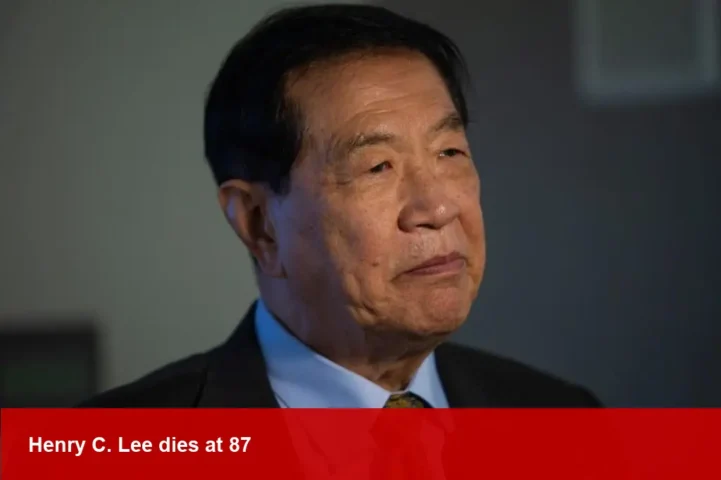
Dr. Henry C. Lee, the internationally recognized forensic scientist who consulted on high-profile criminal investigations across the United States and around the world, died Friday at his home outside Las Vegas after a brief illness. He was 87. His death was announced by his family and the faculty at the University of New Haven, where he founded the school’s forensic science program.
Career and notable cases
Born in Taiwan, Lee built a career as a leading forensic expert, working in all 50 states and more than 46 countries. Over decades in the field he served as a consultant to roughly 600 law enforcement agencies and testified in more than 1,000 criminal and civil court proceedings in the United States and abroad.
Lee’s work included high-profile matters that drew national attention. He served as a defense expert in the O.J. Simpson trial and consulted on investigations including the murders of JonBenét Ramsey and Laci Peterson, the death of Chandra Levy, the Elizabeth Smart kidnapping, forensic work after the Sept. 11 terror attacks, and the reinvestigation of the John F. Kennedy assassination.
In Connecticut in the late 1980s, Lee gained wider notoriety for his role in what became known as the Woodchipper Murder. Testifying for the prosecution, he described finding small fragments of tooth, bone and hair that were used in the first murder prosecution in the state without a recovered body.
University tribute and legacy
The University of New Haven said Lee founded its forensic science program, which has since grown into the Henry C. Lee Institute of Forensic Science. In a statement, University President Jens Frederiksen praised Lee’s contributions: “A remarkable individual, Dr. Lee’s contributions to our University as well as forensic science and law enforcement are extraordinary and unmatched. His legacy lives on in the generations of students and law enforcement professionals he impacted throughout his brilliant career.”
The university’s announcement, issued alongside notice from his family, noted Lee’s central role in professional education and the global reach of his consulting work.
Personal qualities and public profile
Colleagues and the national press often noted Lee’s affable manner and his ability to explain complex forensic science to juries. The article notes he spoke with an accent and that lawyers on both sides of cases frequently sought his testimony. By the 1990s he had become a widely known public figure in forensic science.
Lee began his professional life in Connecticut as a state police scientist after a brief period as an academic in New York. Over an extraordinary career he became a familiar presence in courtroom and investigative work worldwide.
Image Referance: https://www.courant.com/2026/03/27/internationally-recognized-forensic-scientist-dr-henry-c-lee-dies-at-87/