
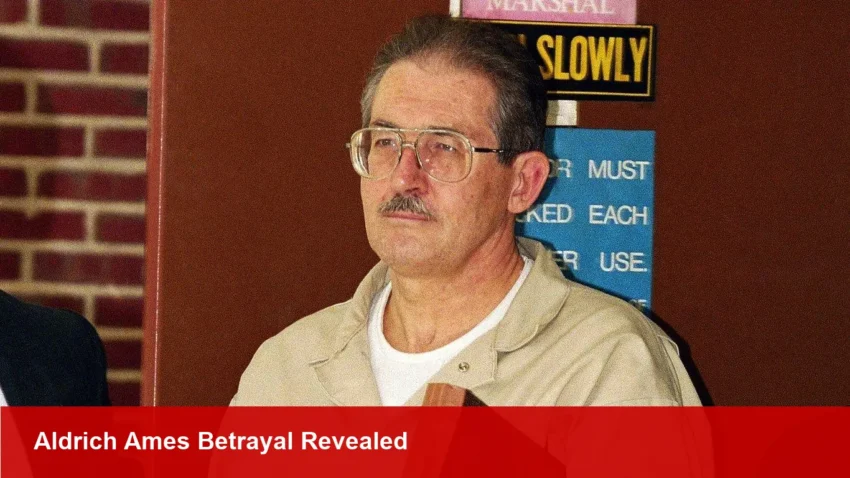
Aldrich H. Ames, 84, a former Central Intelligence Agency officer widely regarded as the most damaging traitor in American intelligence history, died on January 5 at the Federal Correctional Institution in Cumberland, Maryland, where he was serving a life sentence. The cause of death has not been officially disclosed, The Washington Post reports.
- Fast Facts:
- Died: January 5, age 84, at FCI Cumberland, Maryland.
- Convicted: Pleaded guilty in 1994; serving life without parole.
- Espionage period: Sold secrets to the Soviet Union/Russia in the 1980s–early 1990s.
- Consequences: Leaks linked to the exposure and deaths of multiple CIA and partner agents.
- Payment: Received over $1 million in cash and other promises from Moscow.
How Aldrich H. Ames became the worst agent in CIA history
Born May 26, 1941, Ames followed a path into intelligence shaped by family ties — his father later worked at the CIA — and joined the agency as a young man. Over decades he gained access to highly sensitive counterintelligence information, a level of access that would make his later betrayals catastrophic for U.S. operations overseas.
Beginning in 1985, Ames began passing the names of CIA-recruited sources and detailed operational information to Soviet — and later Russian — handlers. U.S. intelligence officials later determined those disclosures led to the arrest, imprisonment and, in some cases, the deaths of agents working for the United States and its allies. His case is widely cited inside the intelligence community as one of the agency’s most severe internal security failures.
How Ames profited on his treason
Ames received cash payments that exceeded $1 million, along with promises of future remuneration and other incentives. His sudden wealth — a Jaguar, a Virginia home purchased with cash and other luxury purchases — eventually drew suspicion, but not quickly enough to stop the damage. Federal investigators arrested Ames in February 1994; he pleaded guilty and received a life sentence without the possibility of parole.
The Legacy
Whatever one calls his record, Ames’s case left an indelible mark on U.S. intelligence. Three of the most significant impacts:
- Exposure of assets: His disclosures led to the compromise and likely deaths of at least ten CIA and allied intelligence sources.
- Institutional change: The scandal forced extensive counterintelligence reviews and reforms across the CIA and other agencies to prevent a repeat breach.
- Cultural imprint: Ames’s betrayal became a high-profile study in espionage — inspiring books, documentaries and a 1990s television film that examined how one insider undermined decades of work.
Social proof: Reactions and tributes
The news of Ames’s death drew reactions from media outlets that have long covered the case and from current and former intelligence observers who describe the affair as a watershed moment in Cold War espionage. Coverage emphasized the human toll — the agents compromised and the long-term institutional lessons — rather than any sympathy for Ames himself. Family members have made no public statement, and official agencies have not released additional details about the death.
“These spy wars are a sideshow which have had no real impact on our significant security interests over the years,” Ames said in court while acknowledging he had “betrayed serious trust.”
In prison Ames pursued legal challenges, studied law, corresponded with journalists and researchers, and attempted to contest claims on the funds he received. His conviction and sentence remained in place until his death. The full circumstances of his passing are pending any official release of information from federal authorities.
For readers seeking context: the Washington Post reported the death on January 7, and legacy coverage will likely continue as intelligence historians and media outlets reassess the long-term consequences of one of the Cold War’s most consequential betrayals.
Image Referance: https://news.novyny.live/en/cia-spy-who-betrayed-the-us-for-the-ussr-dies-at-84-304600.html